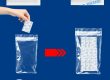
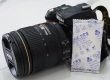
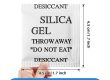
Selecting the right Silica Gel Desiccant comes down to matching moisture risk, industry standards, and packaging realities. In this guide, you’ll learn how silica gel works, how much you need, what certifications to look for, and how to evaluate safe indicator dyes and pouch materials—so you can protect products with confidence.
Table of Contents
ToggleWhat Is Silica Gel Desiccant and Why It Works
Silica gel is an amorphous, highly porous form of silicon dioxide that adsorbs (binds) water vapor inside its internal pore structure. It can take up a large fraction of its weight in moisture—especially at higher relative humidity—while remaining free-flowing and non-deliquescent. Compared with clay, silica gel performs especially well as RH rises and maintains flow even at saturation.
Key Decision Framework (At a Glance)
Environment & Duration: What RH/temperature and how long must the package stay dry?
Regulatory Fit: Which standard governs your use case (e.g., MIL-D-3464, USP <671>, JEDEC J-STD-033)?
Sizing: Calculate desiccant units based on barrier, surface area/volume, and storage time.
Format & Materials: Choose packet vs. canister; Tyvek/low-dust vs. paper/kraft.
Indicator Safety: Prefer cobalt-free indicators where compliance or food/pharma proximity matters.
Operations: Labeling, shelf life, and recharge/replace strategy.
1) Understand the Standards That May Apply
Military/Industrial Shipping (MIL-D-3464E)
For general packaging and static dehumidification, MIL-D-3464E defines performance, durability, and “desiccant unit” sizing. One unit must adsorb ≥3.00 g water at 20% RH, 25 °C and ≥6.00 g at 40% RH, 25 °C under qualification testing; inspection limits are slightly lower to allow manufacturing variation.
Practical note: Suppliers often equate 1 unit to roughly one ounce of desiccant; Clariant lists 1 unit ≈ 26 g silica gel (≈33 g bentonite), with standard bag sizes from 1/6 to 80 units. Clariant
Pharmaceuticals & Healthcare (USP <671>, EP Chapters)
For bottles/blisters, USP <671> Containers—Performance Testing provides moisture permeation tests and classifications; labs (e.g., Eurofins) and technical summaries outline method details and how desiccants are considered alongside barrier properties. Use this when your moisture control must be demonstrated via container performance, not just desiccant presence. USP NF+2Eurofins+2
Electronics (JEDEC/IPC J-STD-033)
Moisture-sensitive devices (MSDs) require dry-pack. J-STD-033 includes a formula to calculate desiccant units from the moisture barrier bag’s surface area and WVTR, storage time, and the unit capacity at 10% RH & 25 °C, ensuring parts survive reflow without popcorning. NAVSEA
2) Size It Right: How Many Desiccant Units Do You Need?
The Unit Concept
A desiccant unit is a performance measure (not just weight). Under MIL-D-3464E, test points are 3 g @ 20% RH and 6 g @ 40% RH at 25 °C. Many vendor charts and calculators map container volume/surface area to units; in electronics, JEDEC ties units to bag WVTR, surface area, and desired shelf life.
Rule of thumb: Higher RH, longer storage, larger surface area, and poorer barrier (higher WVTR) all drive more units.
Temperature & RH Effects
Silica gel capacity increases with RH and varies slightly with temperature (capacity at a given RH declines modestly from 20–50 °C), but silica gel still outperforms clay at high humidity—often the critical regime for corrosion/mold risk. Clariant
3) Choose the Right Chemistry and Indicator
Non-Indicating vs. Indicating Silica Gel
Non-indicating silica gel is standard for most food/pharma and where visual indicators aren’t required.
Indicating silica gel changes color as it saturates, enabling maintenance or recharge schedules.
Indicator safety: Traditional blue indicator uses cobalt(II) chloride, classified in the EU as Carcinogen 1B (H350i) and listed as an SVHC; many organizations favor cobalt-free (orange/green) indicators to satisfy EU compliance and reduce toxicological concerns—especially near foods or drugs. European Chemicals Agency+1
Conservation and safety notes echo caution but clarify that cobalt-indicating gels are not universally banned; compliance is jurisdiction- and application-specific. Food-contact proximity should use approved dyes or non-indicating media. National Park Service+1
4) Pick Packet Construction & Format
Low-Dust, Durable Outer Materials
MIL-D-3464E distinguishes Type I (general), Type II (low-dust, e.g., Tyvek®), and Type III (enhanced durability). Low-lint Tyvek is preferred in clean environments (electronics, medical devices). Abrasec
Sizes & Delivery Forms
Packets/Bags: From 1/6 to 80 units for cartons, crates, and MBBs. Clariant
Canisters/Cartridges: For bottles (pharma/nutraceutical), ease of insertion and automated filling.
Beads/Bulk: For breathers, tanks, or custom housings.
5) Industry-Specific Guidance
Pharmaceuticals & Nutraceuticals
Validate the container–closure system per USP <671>; add desiccant to meet moisture ingress limits rather than relying on desiccant alone.
Confirm dye approvals for any indicator in potential proximity to drug product (many teams select non-indicating silica gel). USP NF+1
Electronics (MSDs)
Follow J-STD-033 for dry-pack: calculate units with the standard’s equation and ensure labels/humidity cards are included. NAVSEA
Industrial/Military Logistics
Use MIL-D-3464E-compliant bags; select unit count for container size, barrier quality, route climate, and storage duration. Typical supplier charts align with the unit definition above.
6) Verification, Labeling, and QA
Label units per bag: MIL-D-3464E requires clear unit content marking; verify unit weight ≤ 50 g and unit volume ≤ 45 mL where applicable. Wisesorbent
Incoming QC: Check packet seal integrity, dusting (Type II if needed), and indicator response (if used).
Stability checks: Weigh-and-dry or RH chamber spot tests to confirm capacity; for regulated sectors, retain vendor CoA and lot traceability.
7) Recharge & End-of-Life
Silica gel can be recharged (typically by heating ≈ 120 °C until dry), but in regulated packaging you’ll usually replace rather than recharge packets to maintain GMP traceability. Handle any cobalt-containing indicating gels according to local regulations/SDS and prefer cobalt-free going forward.
8) Common Mistakes to Avoid
Sizing by grams, not units: Always anchor to desiccant units tied to RH/temperature test points.
Ignoring barrier quality: A low-WVTR bag can reduce the units required; a poor barrier can make any packet under-sized. JEDEC explicitly accounts for WVTR. NAVSEA
Using cobalt indicators where restricted: EU and many customers require cobalt-free. European Chemicals Agency
Assuming “any packet” suits pharma/electronics: Follow USP <671> or J-STD-033 as applicable.
9) Quick Selection Checklist
Use case: Pharma / Electronics / Industrial / Food-adjacent
Standard: USP <671> / J-STD-033 / MIL-D-3464E
Barrier: WVTR (bag/liner), surface area, storage time
Units: Calculate per standard (or supplier chart)
Format: Packet (Type I/II/III), canister, bulk
Indicator: Cobalt-free unless jurisdiction and product allow otherwise
Documentation: CoA, labeling, lot traceability, SDS
Conclusion
Choosing Silica Gel Desiccant is a technical decision: size by units, align to the right standard, select safe indicator chemistry, and verify against your barrier and shelf-life targets. When in doubt, lean on MIL-D-3464E for unit definitions, USP <671> for container performance, and JEDEC J-STD-033 for electronics dry-pack. Getting these right prevents corrosion, caking, and product failures—before they start.

Explore our solutions and secure your products at iDesiccant.com!
- The Complete Guide To Silica Gel Desiccant - February 20, 2026
- How To Dispose of Desiccant Silica Gel: A Comprehensive Guide - November 25, 2025
- How Long Does Desiccant Silica Gel Last? Best Answer - November 25, 2025